

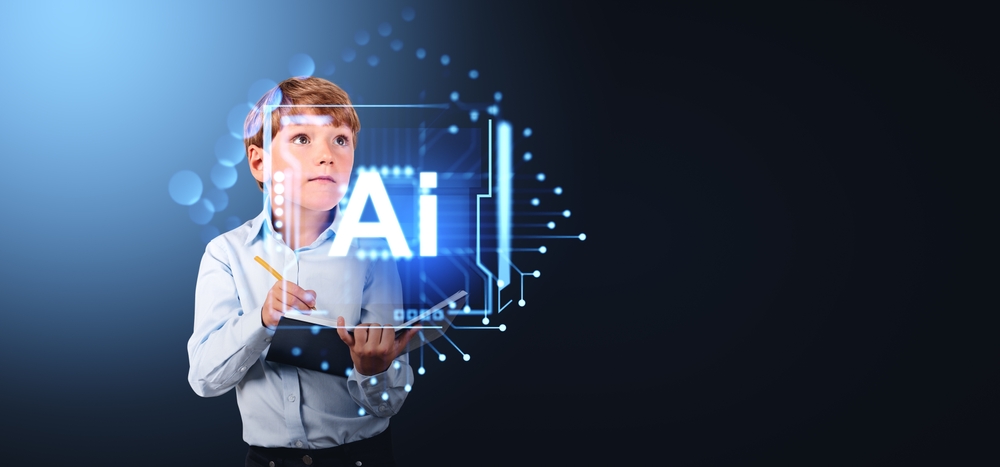
Artificial intelligence is transforming education at remarkable speed. From homework support and revision planning to instant explanations and personalised learning, AI tools are becoming part of everyday life for students and teachers alike.
For many schools and parents, however, the rise of AI also brings concerns. Will students stop thinking for themselves? Will technology encourage laziness or cheating? Could AI weaken traditional learning skills?
These concerns are understandable, but they often miss an important point.
Artificial intelligence is best viewed as a tool — not a shortcut.
Like calculators, search engines, and computers before it, AI has the potential to improve learning when used properly. The key is ensuring students use technology to strengthen understanding rather than replace effort altogether.
Technology Has Always Changed Education
Every major technological shift in education has been met with scepticism.
There were concerns that calculators would damage maths skills. Some feared the internet would stop students reading books or conducting proper research. Spellcheckers were criticised for weakening spelling ability.
Yet over time, schools adapted. Technology became integrated into education in ways that supported learning rather than destroyed it.
AI represents the next stage of that evolution.
The challenge is not whether AI should exist in education, but how it should be used responsibly.
The Difference Between Support and Dependency
There is a significant difference between using AI to support learning and using it to avoid learning.
A student who asks AI to explain a science concept differently is actively trying to understand the subject. A student who copies a full assignment generated by AI without reading it is simply avoiding the work.
The distinction matters enormously.
Used responsibly, AI can help students:
- Understand difficult topics
- Revise more effectively
- Organise their workload
- Improve confidence
- Explore subjects in greater depth
Used irresponsibly, it can encourage dependency and weaken independent thinking.
Ultimately, AI should enhance education rather than replace the learning process itself.
AI Can Personalise Learning
One of the biggest advantages of AI is its ability to provide personalised support.
In a classroom environment, teachers must divide their attention across many students. AI tools can give pupils immediate explanations, additional examples, and alternative ways of understanding topics they may struggle with.
Some students benefit from being able to:
- Ask repeated questions privately
- Learn at their own pace
- Receive simplified explanations
- Practise skills independently
- Access support outside school hours
For students lacking confidence, AI can sometimes reduce the fear of asking “basic” questions in front of others.
This does not replace teaching, but it can reinforce it.
Human Skills Still Matter Most
Despite rapid advances in artificial intelligence, schools are still responsible for developing fundamentally human abilities.
These include:
- Critical thinking
- Creativity
- Communication
- Problem-solving
- Emotional intelligence
- Independent judgement
AI can provide information quickly, but it cannot truly replace human understanding, curiosity, or original thought.
In fact, the rise of AI may make these human skills even more valuable in future workplaces.
Students still need to learn how to think, analyse, argue, evaluate evidence, and communicate ideas clearly. Technology can assist with these processes, but it cannot do the intellectual development for them.
AI is Not Always Correct
Another important lesson for students is that AI is not infallible.
Artificial intelligence systems can sometimes:
- Produce inaccurate information
- Invent facts
- Misunderstand questions
- Present biased content
- Oversimplify complex issues
This means students must still learn how to verify information, check sources, and think critically about what they are reading.
Blind trust in AI can be just as dangerous as ignoring it completely.
Strong digital literacy and critical thinking skills remain essential.
Schools Need Clear Boundaries
As AI becomes more common, schools will increasingly need clear and realistic policies.
Most educators recognise that attempting to ban AI entirely is unlikely to succeed long term. Students will encounter AI throughout their future education and careers.
Instead, schools are focusing more on teaching responsible use.
This includes helping students understand:
- When AI support is appropriate
- What counts as plagiarism
- Why independent work still matters
- How to reference AI responsibly
- The ethical use of technology
The goal should be to prepare students for a future where AI is common, while still protecting academic integrity.
Effort Still Matters
Perhaps the biggest misunderstanding about AI is the idea that faster always means better.
Real learning still requires:
- Practice
- Repetition
- Mistakes
- Reflection
- Patience
- Independent thought
No technology can completely remove that process.
Students who rely too heavily on shortcuts may achieve short-term results, but they often struggle later when deeper understanding and independent thinking are required.
Education has never simply been about producing answers. It is about developing knowledge, judgement, and capability over time.
Final Thoughts
Artificial intelligence is already reshaping education, and its influence will continue to grow in the years ahead.
The most productive approach is not fear or blind enthusiasm, but balance.
AI should be treated as a powerful educational tool that supports learning, encourages curiosity, and improves access to knowledge. However, it should never become a substitute for effort, discipline, and genuine understanding.
Students who learn to use AI responsibly are likely to gain significant advantages in the future. Those who use it merely to avoid thinking may ultimately hold themselves back.
The technology itself is not the problem. The way it is used will determine whether it strengthens education or weakens it.