

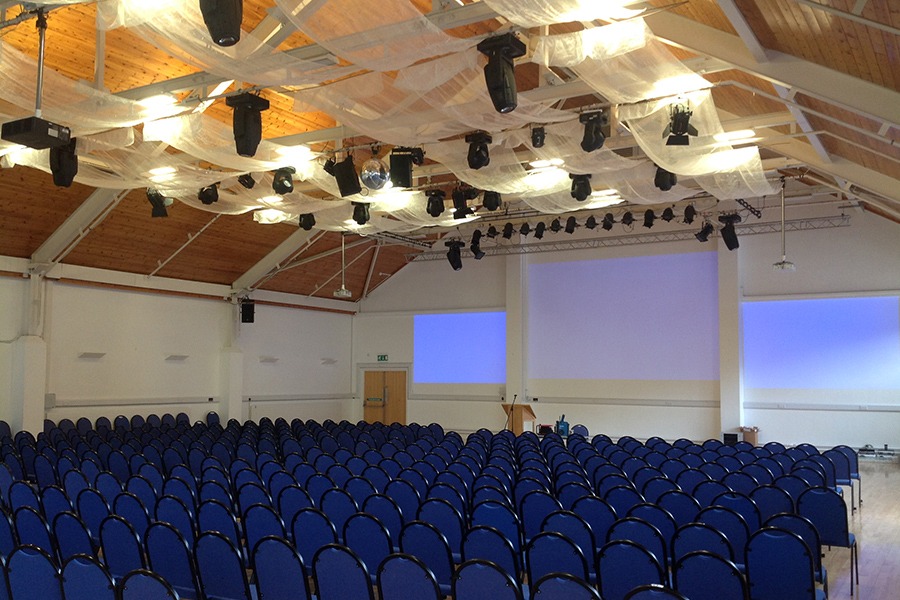
The school hall is one of the most important spaces within any educational setting. It is often the largest indoor area in the building and serves a wide variety of purposes throughout the academic year. From daily assemblies and presentations to school productions, examinations, open evenings and community events, the hall is a central hub of activity.
Despite its importance, audio quality is often overlooked until problems arise. Many schools continue to rely on ageing sound systems that struggle to deliver clear audio, leading to poor speech intelligibility, frustrated staff and disengaged audiences.
A well-designed school hall audio system can transform the experience for pupils, teachers, parents and visitors. This guide explains what schools should consider when planning, upgrading or replacing their hall audio system.
Why Audio Quality Matters in Schools
When a headteacher addresses a school assembly, every pupil should be able to hear clearly. When children perform in a school production, parents should be able to enjoy the performance without straining to hear dialogue or music.
Poor audio can negatively affect:
- Communication
- Engagement
- Accessibility
- Confidence during performances
- Visitor experience
- Community events
In contrast, a properly designed audio system creates a more professional environment and supports a wide range of educational activities.
Understanding the Challenges of School Halls
School halls are rarely designed with acoustics as a primary consideration.
Common challenges include:
High Ceilings
Many halls feature high ceilings that cause sound reflections and echo.
Hard Surfaces
Walls, floors and windows reflect sound waves, making speech less clear.
Large Open Spaces
The further sound travels, the harder it becomes to maintain clarity and consistency.
Multiple Uses
The same hall may host an assembly at 9am, a PE lesson at 11am and a school performance in the evening.
Each activity places different demands on the audio system.
What Makes a Good School Hall Audio System?
The best systems are not necessarily the loudest.
A successful installation should provide:
- Clear speech reproduction
- Consistent coverage throughout the hall
- Ease of use
- Reliability
- Flexibility
- Future scalability
The objective is to ensure that every member of the audience can hear clearly regardless of where they are sitting.
Core Components of a School Hall Audio System
Speakers
Speakers form the foundation of any audio system.
Options include:
- Wall-mounted speakers
- Column speakers
- Ceiling-mounted speakers
- Portable speaker systems
The choice depends on the hall’s size, layout and intended use.
Professional system design ensures sound is distributed evenly throughout the space.
Amplifiers
Amplifiers provide the power required to drive the speakers.
Modern amplifiers are often energy efficient and can integrate with wider AV systems.
Mixing Consoles
A mixer allows users to manage multiple audio sources simultaneously.
These may include:
- Microphones
- Laptops
- Music players
- Musical instruments
- Wireless devices
Mixers are particularly valuable for performances and larger events.
Microphones
Microphones are among the most frequently used components in any school hall.
Popular options include:
Handheld Wireless Microphones
Ideal for assemblies, presentations and guest speakers.
Lapel Microphones
Suitable for staff who need hands-free operation.
Headset Microphones
Often used during performances and productions.
Wireless systems provide flexibility while reducing cable-related hazards.
Audio Requirements for Assemblies
Assemblies place unique demands on a sound system.
The primary goal is speech intelligibility.
Pupils sitting at the back of the hall should hear exactly the same message as those at the front.
An assembly-focused audio system should provide:
- Consistent sound coverage
- Clear vocal reproduction
- Simple controls
- Fast setup
Many schools benefit from systems that can be operated easily by non-technical staff.
Supporting School Performances
School productions require a more advanced audio solution.
Drama productions, concerts and talent shows often involve:
- Multiple microphones
- Music playback
- Instrument inputs
- Complex sound balancing
A system designed for performances can significantly improve audience experience and pupil confidence.
Schools that host regular productions should ensure future performance requirements are considered during system design.
Accessibility and Inclusion
Accessibility is a growing priority across UK education.
Audio systems play an important role in creating inclusive learning environments.
Benefits include:
- Improved speech clarity
- Better engagement for all pupils
- Support for hearing-impaired users
- Enhanced communication during events
Some schools may also benefit from hearing loop systems to support visitors and staff who use hearing aids.
Creating accessible spaces supports both educational outcomes and equality objectives.
Portable vs Fixed Audio Systems
Schools often need to decide between portable and permanently installed solutions.
Portable Systems
Advantages:
- Flexible
- Lower upfront investment
- Easy to move between locations
Disadvantages:
- Longer setup times
- Greater wear and tear
- Potentially inconsistent performance
Fixed Systems
Advantages:
- Professional appearance
- Consistent sound quality
- Simple operation
- Reduced setup requirements
Disadvantages:
- Higher initial installation cost
- Less flexibility
The right choice depends on the school’s requirements and budget.
Future-Proofing School Hall AV Systems
Technology continues to evolve rapidly.
Modern school halls increasingly support:
- Video conferencing
- Hybrid events
- Live streaming
- Recording
- Wireless content sharing
When investing in audio infrastructure, schools should consider future requirements as well as current needs.
Choosing scalable systems can help avoid costly upgrades later.
Budget Planning and Procurement
Budget remains a significant consideration for most schools.
However, focusing solely on purchase price can be a mistake.
Schools should evaluate:
- Equipment quality
- Reliability
- Lifespan
- Maintenance requirements
- User training
- Support services
A higher-quality solution often delivers better long-term value than a lower-cost alternative that requires regular repairs or replacement.
Common Mistakes Schools Make
Underestimating Acoustic Challenges
Many schools focus on equipment specifications without considering room acoustics.
Buying Based on Price Alone
The cheapest solution may not meet long-term requirements.
Ignoring Future Expansion
Technology requirements often grow over time.
Lack of Staff Training
Even the best system will underperform if users lack confidence operating it.
Choosing Generic Solutions
Every hall is different. A tailored design typically produces better results than a one-size-fits-all approach.
How Professional AV Support Can Help
Working with an experienced education AV provider can simplify the planning process.
Professional support can include:
- Site surveys
- Acoustic assessments
- System design
- Installation
- Training
- Ongoing support
This helps ensure the final system meets both current and future needs.
Conclusion
A school hall audio system is far more than a collection of speakers and microphones. It is a vital communication tool that supports assemblies, performances, presentations and community engagement.
By considering acoustics, accessibility, future requirements and total cost of ownership, schools can invest in solutions that deliver lasting value.
Whether planning a new installation or upgrading an existing system, a carefully designed audio solution can significantly improve the experience for pupils, staff and visitors alike.
Frequently Asked Questions
What is the best audio system for a school hall?
The best solution depends on hall size, audience numbers and intended use. Most schools benefit from a professionally designed system tailored to their specific requirements.
Are wireless microphones suitable for schools?
Yes. Wireless microphones provide flexibility, reduce trip hazards and are ideal for assemblies, performances and presentations.
Do schools need hearing loop systems?
Some schools may benefit from hearing assistance technology to improve accessibility for visitors, staff and pupils with hearing impairments.
How long should a school hall audio system last?
A professionally installed system can often provide many years of reliable service when properly maintained.
Suggested Internal Links
If your school is planning a hall audio upgrade, KPMS can help design, install and support a solution that meets your educational, operational and budget requirements. Our team works with schools across the UK to deliver reliable AV systems that improve communication, accessibility and engagement.